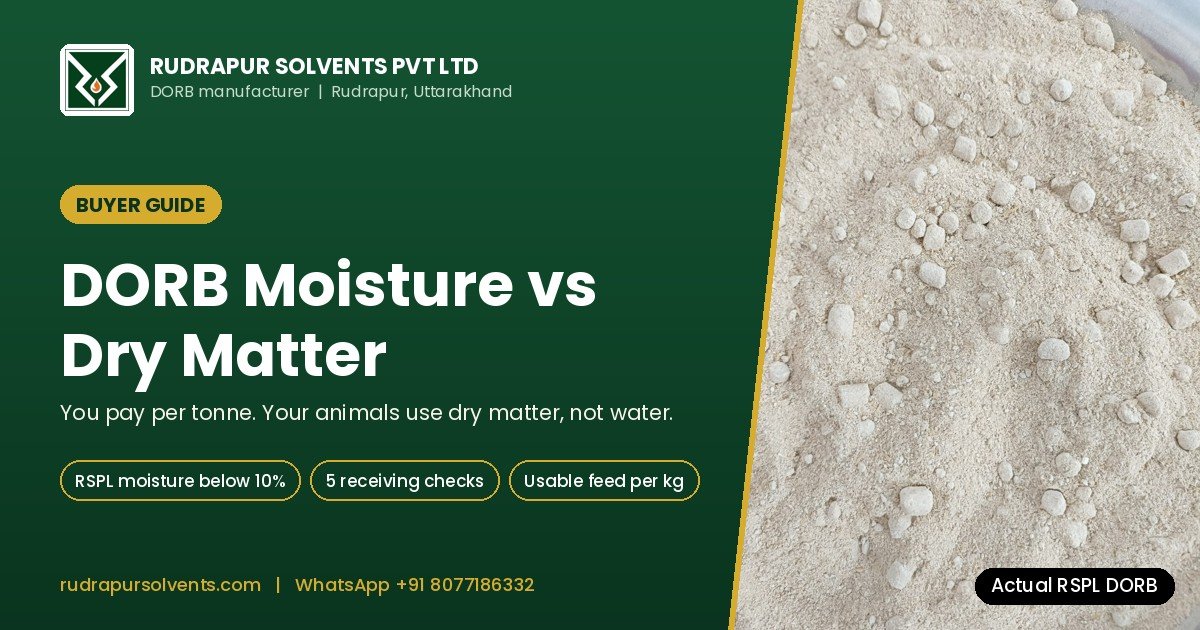
A DORB consignment is bought by weight, but animals use nutrients—not water. That is why moisture is both a quality and commercial parameter.
What dry matter means in a purchase
Dry matter is what remains after water is removed. When two lots have similar quoted prices but different moisture, the wetter lot can deliver less usable material per tonne. It can also increase the risk of clumping, heat, fungal growth and storage loss.
Read moisture with the rest of the report
Moisture should be reviewed alongside protein, fibre, ash, sand silica and AIA. A low price is not automatically a saving if the lot carries excess water or if its apparent protein is accompanied by high fibre or inert contamination.
Five receiving checks
- Ask for a batch-specific report before unloading.
- Match the report to the lot or truck.
- Sample multiple bags and locations, not only the top bag.
- Inspect for damp patches, clumps, musty smell or abnormal bag weight.
- Retain a sealed counter-sample if the consignment is accepted.
Store to protect what you paid for
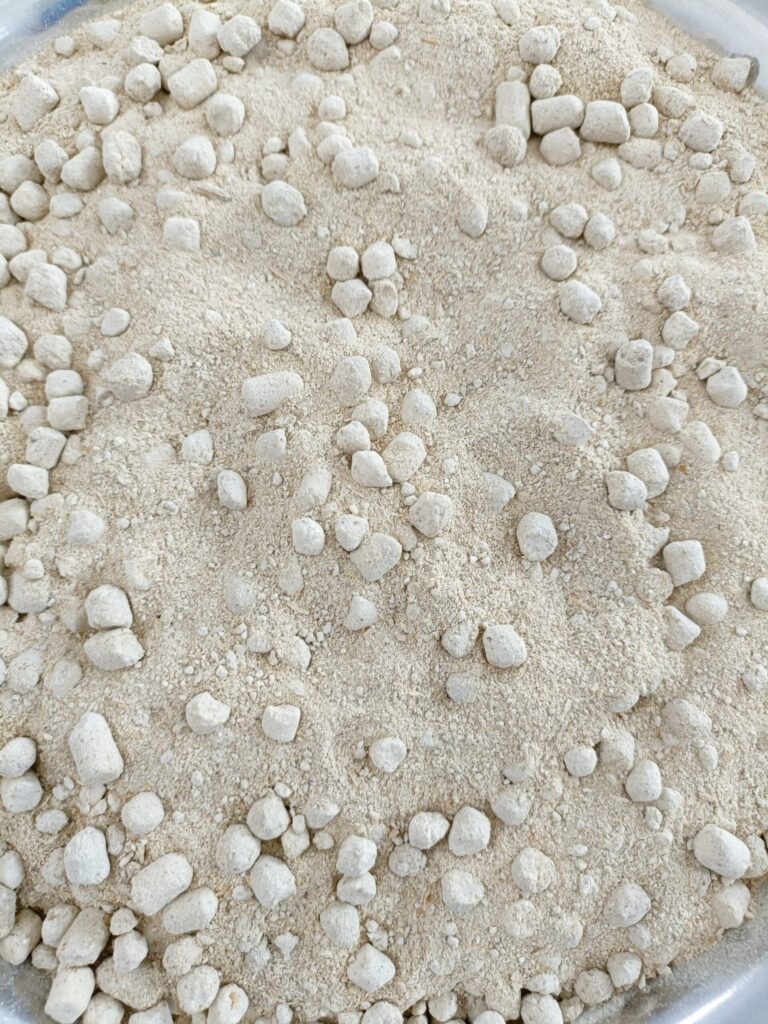
Keep DORB on pallets, away from walls and water entry points, with ventilation and lot dates visible. Use first-in, first-out discipline. Storage cannot improve a weak batch, but poor storage can make a good batch worse.
The right commercial question
Instead of asking only “What is the rate per kilogram?”, ask “What quality and usable dry matter am I receiving per kilogram?” A qualified nutritionist should assess the actual batch before making formulation decisions. RSPL’s quality-first approach is built around controlled moisture and transparent buyer checks.